
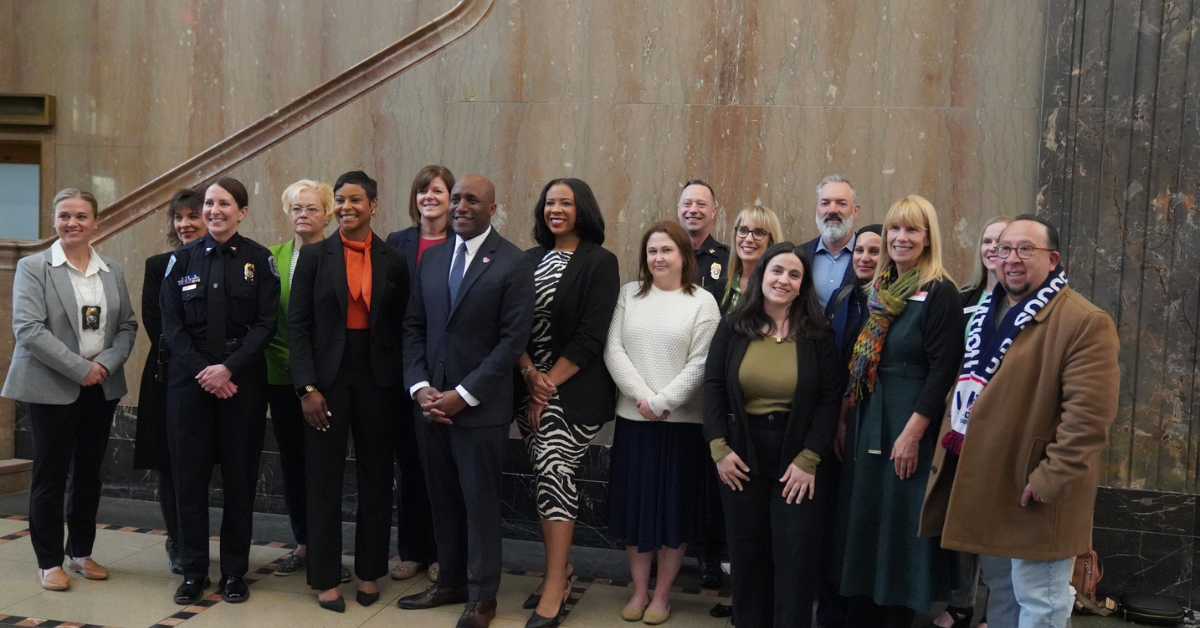
Kansas City has launched a new effort aimed at one of the city’s most serious and painful public safety problems: intimate partner violence.
The city announced the Intimate Partner Violence Intervention (IPVI) Focused Deterrence Program on March 27, 2026, describing it as an evidence-based strategy meant to reduce repeat abuse through earlier intervention, accountability, and coordinated support services.
The program is a partnership between the City of Kansas City, the Kansas City Police Department, the Jackson County Prosecutor’s Office, and local domestic violence service organizations.
At its core, the new program is designed to catch warning signs earlier and respond before violence escalates into something more serious.
City officials say the IPVI model identifies people at risk of committing repeat intimate partner violence and pairs a direct message that violence will not be tolerated with access to services that may help reduce future harm.
In the city’s announcement, officials said the approach is built around early intervention, swift and credible consequences, strong coordination between law enforcement and community partners, and supportive services.
Similar intervention models used elsewhere have reportedly reduced repeat intimate partner violence by 20% or more.
Mayor Quinton Lucas said the need for action is clear. “Intimate partner violence remains one of the most complex and dangerous forms of violence our city faces,” he said.
“Our strategy prioritizes early intervention, accountability, and support for families, strengthening our ability to prevent and disrupt cycles of violence before they escalate into serious harm or tragedy.”
This captures the city’s basic pitch, this is not just about punishment, but about stopping a pattern before it turns deadly.
The timing of the launch is important. Kansas City officials said the program follows a troubling rise in domestic violence homicides in 2025, including cases involving people with no prior criminal history.
Read More: Kansas City’s “New Development Incentives” Could Tie Tax Breaks to Prevailing Wages, Minority Goals and Affordable HousingThe city’s own legislation tied to the program also says the rise in domestic violence-related homicides underscored the need for intervention strategies that reach across the full spectrum of risk, not only the highest-risk offenders.
That framing suggests the city believes some harmful situations can be interrupted earlier, before they become chronic or lethal.
Assistant City Manager Lace Cline said the program is meant to close an important gap in the city’s response.
“This program will fill a critical gap by focusing on early intervention, particularly among first-time and lower-level offenders, to prevent intimate partner violence before it escalates, by providing access to services that support behavior change while ensuring accountability if violence continues,” she said.
“It will strengthen existing coordination across the criminal justice system and our service partners to reduce harm and ultimately save lives.”
Her remarks reflect the broader idea behind the IPVI model: combine a firm deterrence message with practical support, rather than relying on one approach alone.
The program also leans heavily on local organizations that already work with survivors and families affected by abuse.
Newhouse, Synergy Services, Hope House, and the Mattie Rhodes Center are all part of the implementation effort, and the city said these groups will help provide safety planning, advocacy, housing resources, and counseling. Jackson County Prosecutor Melesa Johnson said their role is essential.
“These organizations bring deep expertise and trusted relationships within the community,” she said. “Their involvement ensures this initiative remains survivor-centered and grounded in real-world experience.”
Funding for the initiative includes a $400,000 grant from the Bloch Family Foundation awarded to the Police Foundation of Kansas City, Missouri, Inc., along with a $75,000 investment from the City of Kansas City through the Health Department.
The city said it is also seeking additional support to keep the effort sustainable over the long term, including funding for a dedicated program manager.
Officials plan to implement the IPVI program over a two-year period with support from the National Network for Safe Communities and then evaluate whether it reduces repeat violence and improves survivor outcomes.
What makes this announcement stand out is that Kansas City is trying to do more than react after abuse has already happened.
The city is trying to intervene earlier, communicate consequences clearly, and connect people to help before violence escalates further.
That makes the program one of the more important public safety developments in the city this month, especially as domestic violence continues to affect families across the metro in deeply personal and often devastating ways.