KANSAS CITY, MISSOURI — Thousands of people gathered at Mill Creek Park in Kansas City on Saturday as part of the latest round of No Kings protests, joining a wave of demonstrations across the country that pushed back against President Donald Trump and his administration.
Organizers and local coverage described the Kansas City rally as one of several happening across the metro, with additional gatherings reported in places including Independence, Lee’s Summit, Platte City, Liberty, and the Northland.
The Kansas City protest was part of the third wave of No Kings rallies in the area in less than a year, following earlier demonstrations in June 2025 and October 2025.
The movement’s local organizers said the turnout reflected growing frustration over immigration enforcement, the war in Iran, and policies they believe are pushing the country in the wrong direction.
At Mill Creek Park, protesters said they came because they felt their voices were not being heard through normal political channels.
One protester, Sharon, put it simply: “Congress is not working for us.” Another participant, a Kansas City Public Schools teacher named Carter Taylor, said she returned because she wanted to stand up for her students and keep pressure on leaders after taking part in earlier rounds of the protest movement.
Local organizers said the rally was driven by a mix of concerns, including increased federal immigration enforcement, the ongoing war in Iran, and laws they see as suppressing voters. Beverly Harvey, founder of Indivisible Kansas City, said people were angry enough to keep coming back, adding that there are “a laundry list of things” driving that frustration.
One attendee spoke about the broader emotional weight behind the protests, saying “people of all kinds are outraged by what’s happening in the country right now.”
Another protester focused on foreign policy concerns, calling the conflict in Iran “a useless, vain war” and expressing fear about the possibility of deeper U.S. involvement.
Immigration was another major theme. Participants raised concerns about enforcement practices and the impact on families and communities, with one protester noting that people feel afraid to speak out or be visible in their own neighborhoods.
The protests in Kansas City also matched the broader tone of the national movement. Across the United States, No Kings rallies were held in more than 3,100 locations, with organizers saying the demonstrations were aimed at Trump’s actions and what they described as an authoritarian style of governing.
National reporting said most events were peaceful, though a few places saw arrests or brief clashes.
A wider protest movement moving through Kansas City
Kansas City’s No Kings rally was not a one-off event. It was part of a broader protest network that has returned repeatedly over the past year, and the local turnout showed that the movement still has strong support in the metro.
The presence of protests in multiple parts of the city and suburbs also gave the demonstration a wider footprint than a single gathering point, turning it into a metro-wide political moment.
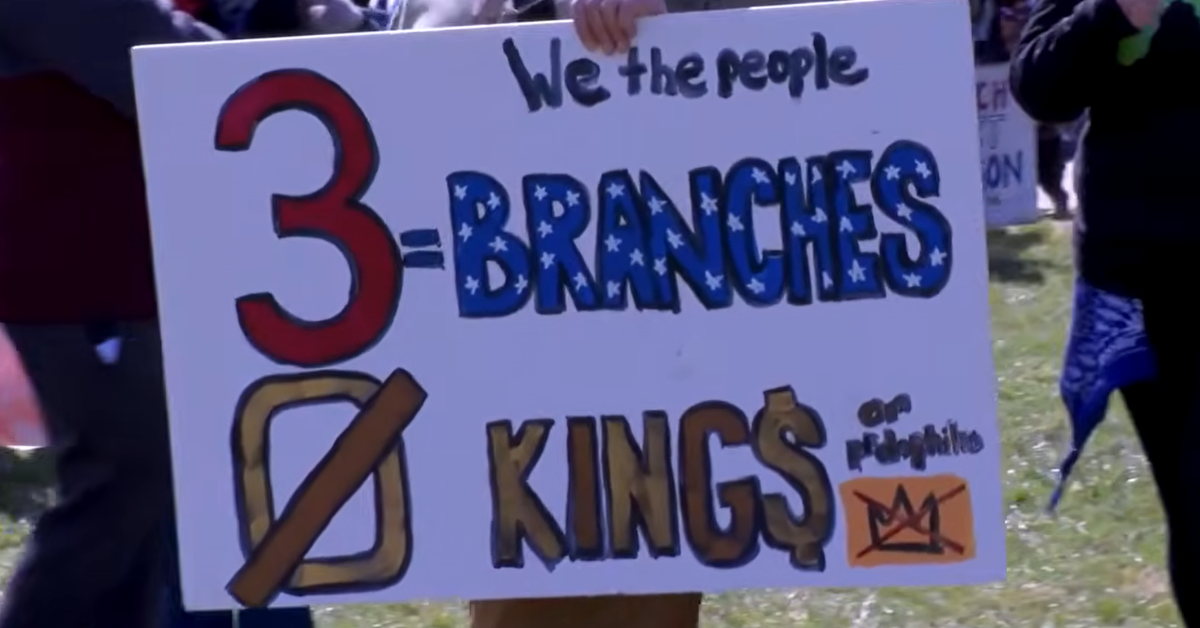
The mood at the park was shaped by more than policy talk. People carried signs, listened to speakers, and stood in a crowd that reflected a mix of activists, teachers, and everyday residents who said they wanted to show up in person rather than stay home and watch politics unfold from a distance.
Local coverage said many participants viewed the protest as the only way to make their voices heard.
The Kansas City area protests also connected with the national message behind the movement: opposition to the president’s policies, anger over immigration enforcement, and concern about the direction of the country.
In Kansas City, those themes landed in a very local way, with rallies not just downtown but also in surrounding communities where residents chose to gather on the same day.
The result was a protest day that felt both local and national at once. Kansas City became one more stop in a broader public push against Trump, but the turnout at Mill Creek Park showed that the message also has a strong home base in the metro.
For the people who showed up, the protest was about more than one issue. It was about staying visible, staying vocal, and showing that the debate is still very much alive.