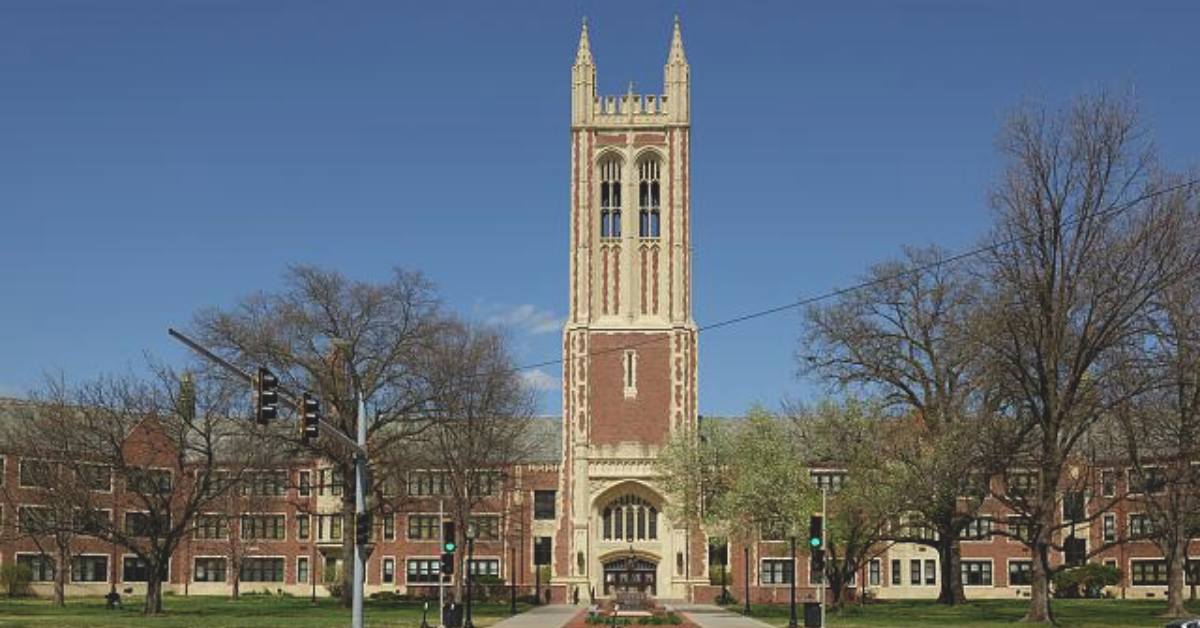
A group of Topeka High School students walked out of class on March 24 and marched to the Kansas Statehouse to protest ICE and a Kansas bill that they say would limit their right to protest.
The walkout drew attention because it happened in the middle of the school day and because the students were making their point directly at the Capitol steps, where they said younger people need to be heard on the issues affecting them now.
The students chanted “We won’t stop” as they moved toward the Statehouse, and once they arrived, several of them spoke plainly about why they were there.
One student said, “We’re here protesting. We don’t want ICE in our city, in our town. We just want a peaceful protest to show everybody that we care and that we should have voices with everything going on.”
Another said their generation cannot stay quiet because the decisions being made now will shape the world they inherit later.
The protest was aimed at a Senate bill that would require public school students to get parental permission before taking part in protests and would also punish school districts if staff were found to have encouraged, facilitated, or allowed a walkout.
Under the proposal, districts could face fines of more than $100,000 per day, and any school day with a walkout would not count as an instructional day for state requirements.
The measure is part of the Senate’s budget version, and negotiators still have to work through the differences between the Senate and House plans before anything is final.
Topeka Public Schools said it supports students expressing their views, but not during class time. The district also said the walkout was not school-sanctioned and that students who joined the protest would be marked absent.
That response shows the same tension that keeps coming up around student walkouts, where the schools are caught between student expression and keeping instruction on schedule.
Read More: Missouri Supreme Court Backs Redistricting Plan as Kansas City District Faces Major Changes
Why the students chose this moment
The timing matters because the protest came while Kansas lawmakers were still debating how far they can go in limiting school walkouts.
Earlier this month, the Kansas Senate approved the protest restrictions as part of the budget process, and supporters of the measure argued that students still have a right to speak out, just not by leaving school during the day.
The Senate version would also penalize districts that were seen as helping organize or support the walkouts, which is why the issue has become so controversial so quickly.
Students and education advocates have pushed back hard on that idea. One Lawrence student said, “The First Amendment does not stop at the schoolhouse gate.”
That argument has become central to the wider debate because the walkouts are not only about immigration policy or ICE.
They are also about whether students can use school hours to protest the issues they care about without being treated as a problem by lawmakers.
The Topeka walkout also fits into a bigger pattern across Kansas. Students in other communities have already staged walkouts this year over immigration enforcement and related political issues, and that broader activity is part of why lawmakers have responded so aggressively.
The issue has moved beyond a single school or one protest, and now it is tied to a much larger political argument about speech, discipline, and how public schools should handle student activism.
The students in Topeka made their message clear by showing up in person and speaking directly in front of the Capitol.
That gave the protest more weight than a social media post or a classroom argument because it placed the issue exactly where lawmakers could see it.
The walkout also showed that some students are willing to treat the debate over ICE and school protest rights as part of the same fight, not separate ones.
There is also a larger political backdrop here. The Senate amendment was introduced by Sen. Michael Murphy, who argued that students still have the right to protest but should be there to learn during school hours.
He said, “The bottom line is we understand we have a right to protest, a right to voice our opinion. But when we’re in high school, we’re there to learn.”
That line captures the divide in the debate: one side sees the walkouts as protected speech, while the other sees them as a disruption to school instruction.
For the students at Topeka High, the protest was about both principle and urgency. They wanted to object to ICE, push back against the Kansas bill, and make clear that they do not want to be told their voices matter less because they are still in school.
The walkout gave them a way to make that point publicly, and it did so at a moment when the policy fight was already active inside the legislature.
The protest is not the final word on the issue, and neither is the Senate bill. Negotiators still have to resolve the budget fight, and the final version of the legislation could still change before it reaches the end of the process.
Even so, the Topeka walkout made one thing obvious. Kansas students are paying attention, they know what is being debated, and they are willing to take action when they believe their rights are being narrowed.