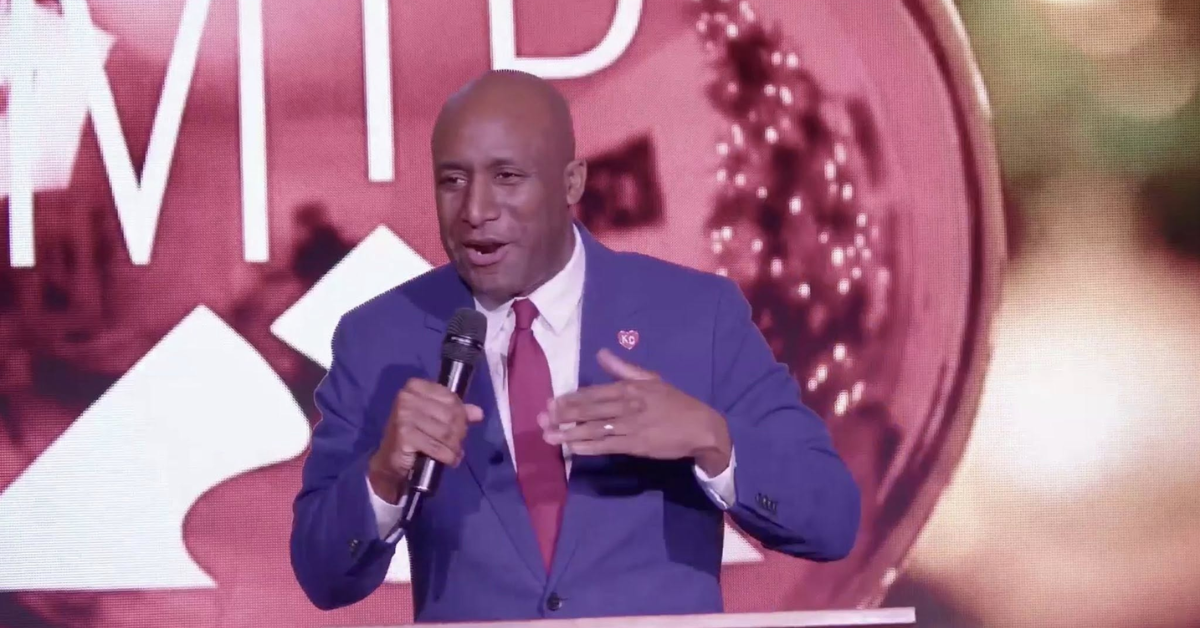
Kansas City’s congressional map is back in the spotlight after Mayor Quinton Lucas used this week’s Virginia redistricting vote to argue that the same national fight over political maps is already reshaping representation here at home.
Lucas shared a graphic comparing Kansas City’s previous district lines with the new map, arguing that long connected communities of interest in the urban core have been broken apart in the push for partisan advantage.
The issue lands hard in Kansas City because Missouri’s mid decade congressional redraw now divides the city into three separate districts, fueling lawsuits and renewed criticism that Kansas City’s political voice is being diluted.
That concern is no longer theoretical. A Jackson County judge allowed Missouri’s new congressional map to remain in place earlier this year, preserving a plan that splits Kansas City and connects parts of the urban core with communities far outside the city.
Under the current map, Kansas City neighborhoods that once shared representation are now spread across multiple districts, forcing some residents into voting blocs dominated by suburban or rural areas.
Critics argue that arrangement weakens the city’s ability to advocate for common priorities such as transit, housing, public safety, infrastructure and economic development.
The mayor’s timing came as Virginia voters approved a constitutional amendment that could allow new congressional maps before the next census, creating another front in the national battle over redistricting and partisan mapmaking.
Read More: Kansas City opens long awaited Grand Avenue pedestrian bridge linking River Market and the riverfrontKansas City is already living with the consequences
That is why Lucas’s message is likely to resonate locally. Kansas City does not need to imagine what it looks like when district lines cut through established communities. The city is already dealing with it.
The Missouri redraw has become one of the clearest examples of how a major urban area can be divided in the middle of a decade instead of waiting for the normal post census process.
For many residents, it reinforces the belief that mapmaking has become more about power than representation.
Reaction to the mayor’s message showed how frustrated many people remain.
One resident asked, “Are we being given an option to vote on the new congressional maps, or was it made for us as always?”
Another argued the issue should not be treated as equal blame on both sides, writing, “The media wants this to be another both sides problem. It isn’t.”
Others took a broader view, saying districts were once meant to represent communities but are now being reshaped mainly to gain seats in Congress.
That mix of anger and exhaustion reflects a deeper Kansas City concern. Redistricting debates can feel distant until residents see their own neighborhoods carved up on a map.
Once that happens, the issue becomes personal. People begin asking whether shared interests still matter and whether their communities are stronger together than divided apart.
Kansas City also carries added weight in this debate because of its racial and historic geography. Many neighborhoods have political identities shaped by generations of history, culture and community ties. When lines cut across those areas, residents often see more than a technical adjustment.
They see communities being separated after decades of building influence.
That is what makes the mayor’s post more than a reaction to another state’s vote. It is a reminder that Kansas City is not watching the national redistricting fight from the sidelines. The city is already one of its examples.
Virginia’s vote may have renewed the conversation, but the bigger issue is much closer to home.
Missouri’s map remains in place, legal challenges continue, and Kansas City residents are still trying to define what fair representation looks like when the city is no longer kept together on the map.
For Kansas City, the real story is not whether gerrymandering is becoming a national issue. It is that the city is already living through it.
Read More: Mayor Quinton Lucas Celebrates $30 Million Variety KC Park Investment for Kansas City Kids